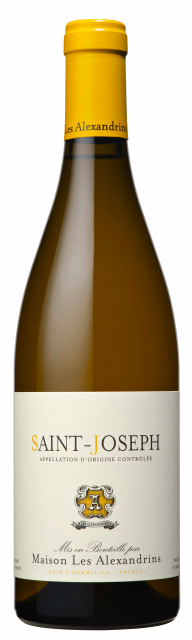
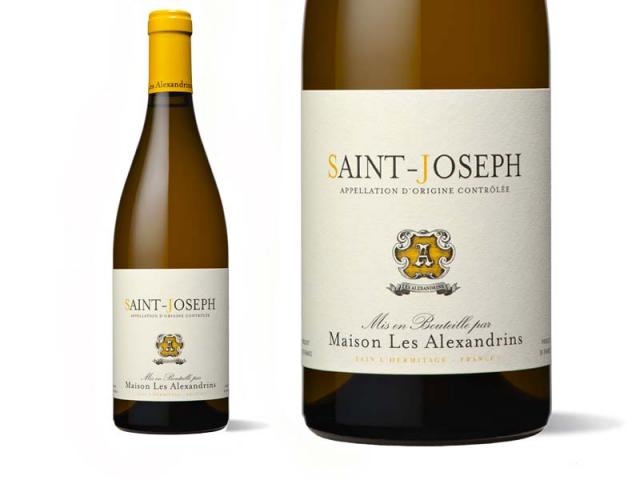
Maison Les Alexandrins, a signature modern in approach and contemporary in style. Balanced and refined, this wine highlights all the minerality of its granite terroir.
Presentation
Description
A partnership between two winegrowers from the Rhône Valley – Nicolas Jaboulet and Alexandre Caso – Maison les Alexandrins produces northern wines in a style at once contemporary and timeless, always from exceptional vineyards unearthed by Alexandre Caso, a specialist in the terroirs of the northern Rhône Valley. Classics with a twist, these wines and how they are aged and blended are guided by the quest for perfect harmony from a very young age. Our vines are located in Saint Jean de Muzols and Tournon.
Terroir
Saint-Joseph’s terroir is mainly granite. The slopes that rise above the Rhône face east/south-east.
The vintage
Marked by contrasting climatic conditions, the 2025 vintage was a demanding, yet a promising year. After flowering under intense sunshine, a hailstorm at the end of June, and then a scorching August, the vines demonstrated remarkable resilience. While yields remained modest, the quality of the grapes concentrated, perfectly healthy, and exemplarily ripe promises great wines. The Roussanne and Marsanne, particularly early, opened the white harvest before the later-ripening Viognier, offering a nice spread out harvest. Syrah reached a uniform maturity across all appellations, requiring a quick and precise harvest. In the cellar, the reds revealed very healthy grapes and concentrated musts, favoring gentle vatting and giving rise to wines with a deep color, fine tannins, and delicious aromas. The whites, in excellent sanitary health, are distinguished by their acidic balance, their well-integrated structure and their beautiful aromas typical of northern grape varieties. Both whites and reds require careful aging to express all the complexity of a mature, harmonious vintage that promises very good aging. Like other years ending with the number 5, 2025 could well be among the very great vintages.
Location
The Saint-Joseph vineyard stretches 40 km along the right bank of the Rhône on the 45th parallel, planted on steep slopes that were first terraced in Roman times. Once called “Vin de Mauves”, Jesuits in the 17th century gave it its current name. It achieved AOC status in 1956. At that time, it spilled into six villages (90 hectares). It was restructured in 1994 and now embraces 26 villages, covering an area of 1,330 hectares. The vineyard winds from Chavanay to Guilherand, connecting Condrieu and Côte-Rôtie in the north with Saint-Péray and Cornas in the south. Nowadays, the appellation is known for its red wines made from Syrah – simultaneously powerful and elegant – and, on a smaller scale, for its whites made from Roussanne and/or Marsanne grapes.
Process
For our first vintage, we wanted to make a balanced wine using grapes from the north of the appellation, to bring minerality and fruit, and berries from the historical centre of Saint-Joseph that add more flesh to the wine. The blend produces balanced, refined wines.
- Vinified in demi-muids (60-litre capacity barrels).
- Fermentation and ageing in demi-muids for 10 months.
- Vinified in demi-muids (60-litre capacity barrels).
- Fermentation and ageing in demi-muids for 10 months.
Varietal
Marsanne
Advice
Tasting
Beautiful, limpid pale yellow robe with brilliant highlights. This wine opens with a fresh and delicate nose featuring seductive aromas of citrus and white flowers, underscored by a very discreet touch of oak indicative of its barrel aging. Vibrant, precise, and mineral, the palate presents a remarkable balance between freshness and vivacity before evolving toward a beautifully textured roundness. It extends the citrus notes through a beautiful saline tension, typical of granitic terroirs, magnificently revealing the subtly sappy character of the Marsanne, punctuated by an elegant touch of bitterness. Best enjoyed over the next four years.
Food pairings
This wine will go wonderfully with grilled fish in a subtle lemony sauce.
Serving
Serve at 12°C. Drink within 3-5 years.